5 Signs Your BMW M4 Engine Is About to Fail – Causes and Solutions
5 Warning Signs That Your BMW M4 Engine Is About to Fail
A BMW M4 is a serious performance car, but even this finely engineered machine can suffer if the engine is neglected. When warning signs appear, acting early can save your bank account and possibly your car. If you’re searching for BMW M4 engines for sale because your current motor feels tired, first check for these tell‑tale symptoms. Many problems are fixable when caught early, which could delay a major repair. The following guide explains each sign, why it happens, and what to do.
Every owner should know how to read their car’s signals. Strange noises, fluid leaks, and warning lights all reveal a story. If you are thinking about replacing your unit and exploring BMW engines for sale, understanding these common issues will help you decide whether repair or replacement makes more sense. Regular maintenance and informed driving habits can prolong the life of your M4 engine.
BMW M4 Generations and Engine Options

First-Generation BMW M4 (F82/F83, 2014–2020)
The first-generation BMW M4 uses the S55B30 engine. It is a 3.0-litre twin-turbo inline-six made for strong power, fast response, and high-performance driving.
- Launched in 2014 as the first BMW M4 generation.
- Model codes are F82 Coupe and F83 Convertible.
- Engine code is S55B30, a 3.0L twin-turbo inline-six petrol engine.
- Power output is 425 hp with 406 lb-ft of torque.
- Transmission options include 6-speed manual and 7-speed dual-clutch automatic.
- Used or reconditioned S55 engines usually cost around £3,000 to over £7,000, depending on mileage, condition, and warranty.
Second-Generation BMW M4 (G82/G83, 2021–Present)
The second-generation BMW M4 uses the newer S58B30T0 engine. It makes more power than the S55 and is used in the latest M4 Coupe, Convertible, Competition, xDrive, CS, and CSL models.
- Introduced for the 2021 model year after the 2020 redesign.
- Model codes are G82 Coupe and G83 Convertible.
- Engine code is S58B30T0, a 3.0L twin-turbo inline-six petrol engine.
- Power ranges from 473 hp in the standard M4 to 523 hp in Competition xDrive models.
- Special models like the M4 CSL and M4 CS produce around 543 hp.
- Transmission options include 6-speed manual in the base coupe and 8-speed automatic in Competition models.
1 – Oil leaks from the valve cover or oil filter housing
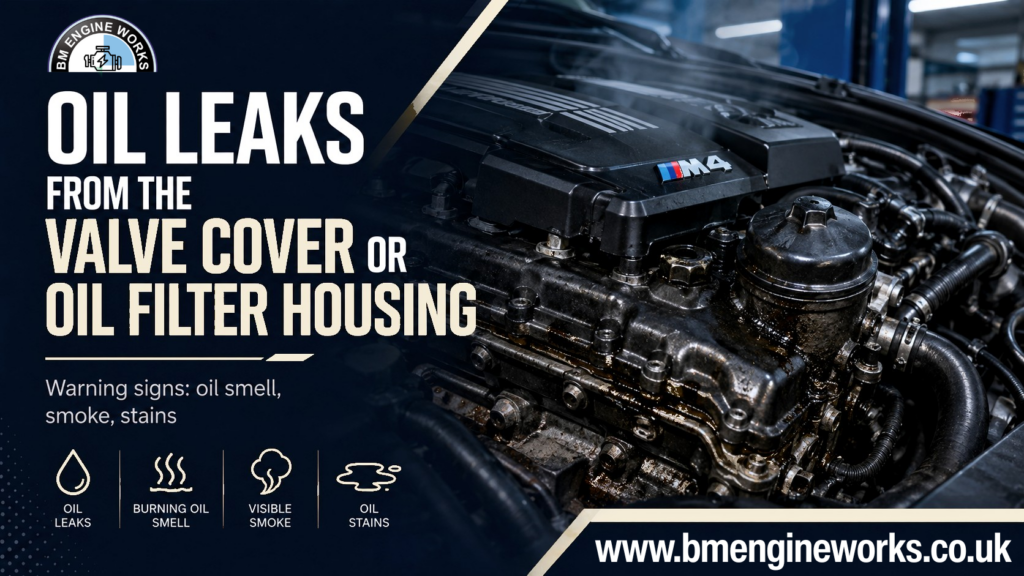
Oil leakage is one of the most obvious indicators that something is wrong. 2014–2020 M4 models often experience leaks around the valve cover gasket and oil filter housing. Owners report oil seeping onto the engine, a burning oil smell, smoke from the engine bay, and stains under the car. These leaks not only waste oil but can also lead to low oil levels and severe internal damage if ignored.
Expert solution: Inspect the valve cover gasket and the oil filter housing for visible oil. If there is seepage, replace the gasket and torque the fasteners to the correct specification. Regularly monitor oil levels and change the oil with quality synthetic oil at the recommended intervals. Early gasket replacement prevents oil from dripping onto other components and reduces the risk of fire. If the leak is severe, have a technician pressure‑test the crankcase ventilation system because blocked vents can increase crankcase pressure and push oil past seals.
2 – High‑pressure fuel pump failure and rough running
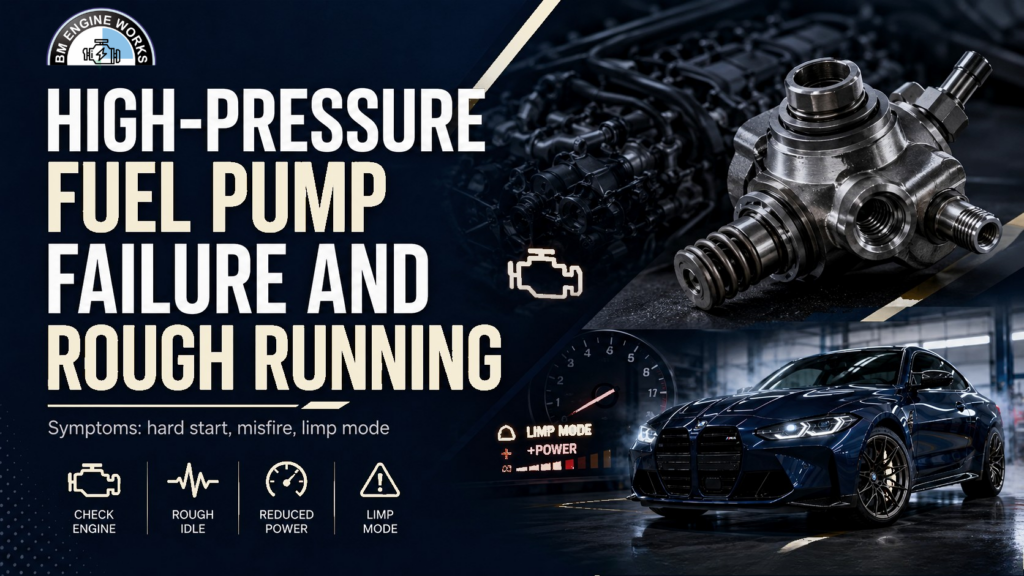
Early F82/F83 M4s (2014–2016) occasionally suffer high‑pressure fuel pump (HPFP) failures. Defective pumps cause hard starting, poor acceleration, misfires, and reduced power. BMW issued recalls to replace faulty pumps because some units were prone to wear or electronic faults. General fuel pump failure symptoms include long cranking, loss of power, rough idle, limp mode activation, and even engine stalling. The pump loses pressure due to internal wear, contaminated fuel, or excessive heat, and the vehicle’s computer often illuminates the check‑engine light when fuel pressure drops.
Expert solution: Diagnose fuel‑pump issues by performing a fuel‑pressure test and scanning for fuel‑pressure codes. A competent technician can check for internal pump wear, contamination, and electronic control faults. When the pump fails, replacement is the only reliable fix. To prevent recurrence, use high‑quality fuel, change fuel filters on schedule, avoid running the tank near empty, and address warning lights promptly. Many owners replace the HPFP proactively at around 60,000 miles if the car is modified or driven aggressively.
3 – Turbocharger issues: loss of power, unusual noise, and smoke
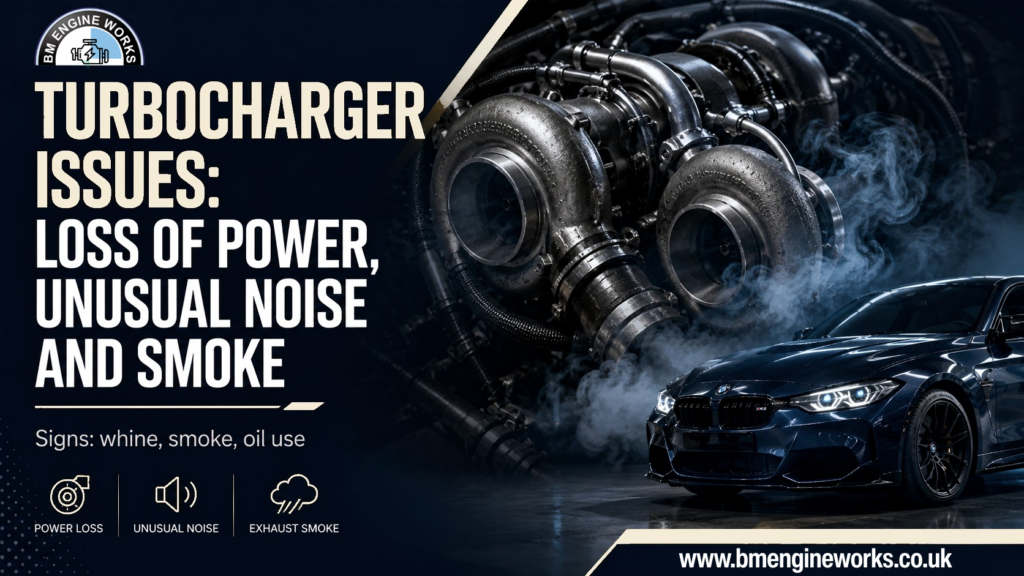
The M4’s twin‑turbo engine delivers huge power, but failing turbos leave noticeable clues. A faulty turbocharger causes sluggish acceleration, decreases overall power, and triggers a check‑engine light. You may hear whining or whistling noises during acceleration, which indicate worn bearings or a boost leak. Blue or grey smoke from the exhaust signals oil leaking past turbo seals and burning in the exhaust. Increased oil consumption and visible oil near the turbo are further warning signs.
Expert solution: If you notice any of these symptoms, reduce driving until a specialist can inspect the turbos. Diagnose the problem by checking boost pressure with a scan tool, performing a smoke test to detect leaks, and inspecting the turbo’s shaft play. Replace or rebuild turbos showing excessive play or damaged seals. Regular oil changes with high‑quality synthetic oil, allowing the engine to warm up before spirited driving, and cooling down properly after hard runs, will extend turbo life. Avoid cheap aftermarket turbo parts; OEM or reputable performance upgrades are essential for longevity.
4 – Overheating due to cooling system faults
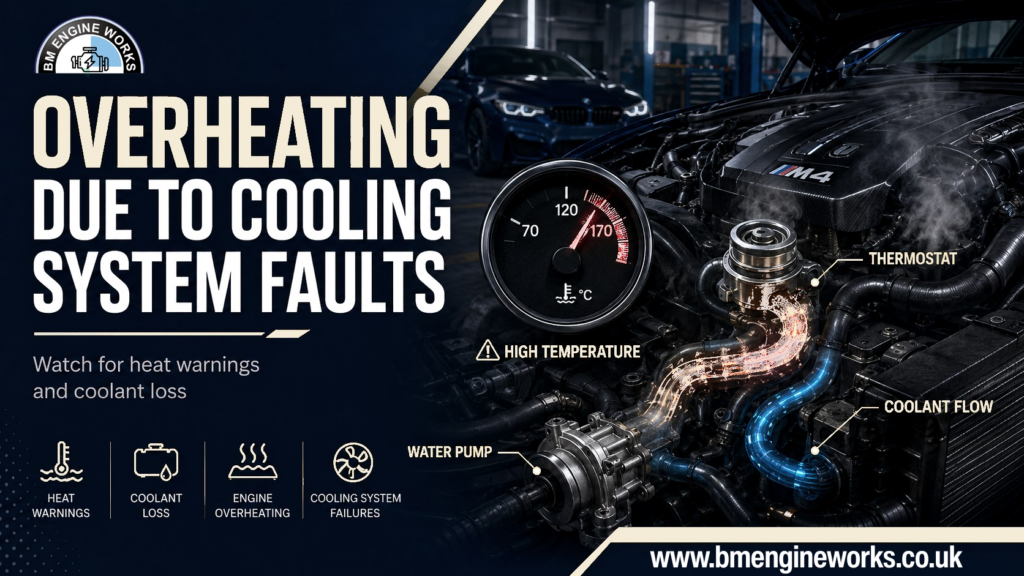
High‑performance engines generate a lot of heat, and the M4’s complex cooling system uses an electronic water pump and thermostat. Failures in these components cause fluctuating coolant temperatures, overheating warnings and coolant leaks. Driving with low coolant or a stuck thermostat can warp cylinder heads, damage the engine block, and lead to a breakdown. An overheating engine may also enter limp mode and show warning lights.
Expert solution: Prevention is straightforward: check coolant levels regularly, inspect hoses for leaks and replace coolant at the intervals set out in the owner’s manual. If the temperature needle fluctuates or you receive an overheating alert, stop the car, let it cool and inspect the cooling system. Replace failing thermostats and water pumps promptly. Regular flushing of the radiator removes debris and maintains cooling efficiency. Upgrading to high‑performance radiators or pumps is wise for track‑driven cars.
5 – Rod bearing wear and knocking noises
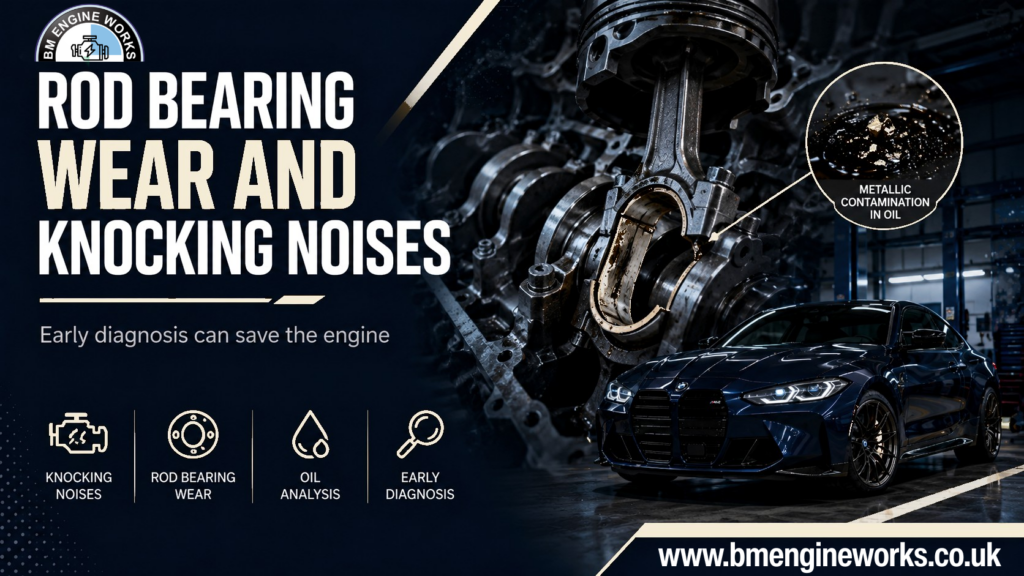
Rod bearings allow the connecting rods to rotate smoothly around the crankshaft. When they wear out, they cause knocking or ticking noises at startup or under load, low oil‑pressure warnings and metallic debris in the oil. BMW M engines, including some S55 units, can experience premature rod‑bearing wear due to material choice, tight tolerances and aggressive driving. Ignoring the noise can lead to bearing failure and catastrophic engine damage.
Expert solution: Catching rod‑bearing wear early saves the engine. Listen for knocks during cold starts and acceleration. Perform oil analysis to detect metal shavings. Preventive replacement of rod bearings between 60,000 and 100,000 miles is common among enthusiasts. Upgraded bearings with improved coatings reduce friction and withstand high temperatures. Always use the recommended oil grade, shorten oil‑change intervals and warm up the engine before hard driving.
Choosing Between Repair and Replacement
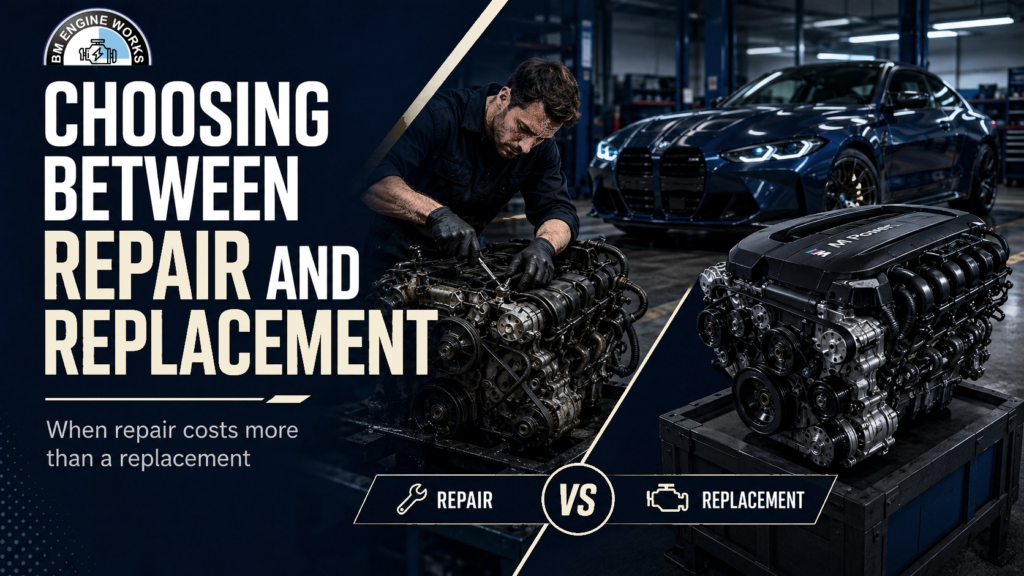
If your M4 shows one or more of the signs above, consider whether repair is economical. Replacing a leaking gasket or a fuel pump costs far less than a new engine. However, a seized engine due to rod‑bearing failure or chronic overheating may not be worth rebuilding. Used or remanufactured engines are available at competitive prices—£3,000 to over £7,000 for an S55 and higher for an S58—providing a fresh start with a warranty. Always weigh the total repair cost against the price of an engine swap and factor in installation labour.
Conclusion
Your BMW M4 can deliver years of thrilling driving when properly maintained. Paying attention to oil leaks, fuel‑pump behaviour, turbocharger performance, cooling‑system health and rod‑bearing wear allows you to fix minor issues before they become catastrophes. Regular maintenance—oil and fuel filter changes, coolant inspections and warm‑up routines—extends engine life. If major problems arise, sourcing a tested replacement motor from a reputable supplier ensures you can keep enjoying the M4’s iconic performance. Taking these steps today will protect your investment and keep your M4 roaring for years to come.
Frequently Asked Questions
How much does it cost to rebuild a BMW M4 engine?
A BMW M4 engine rebuild in the UK typically costs between £3,000 and £7,000. Severe damage or main dealer labour rates can push the total cost to £10,000 or more.
Which BMW M4 engine is the most reliable?
The S55 inline-six (2015-2020 F80/F82 M4) is considered the most reliable BMW M4 engine, praised for its robust design once common rod bearing issues are addressed.
How long does the BMW M4 engine last?
A BMW M4 engine typically lasts between 100,000 and 150,000 miles. With strict maintenance and careful driving, many S55 and S58 engines can exceed 200,000 miles.
When does the BMW M4 need its engine service?
The BMW M4 requires standard engine service (oil change) every 10,000 miles or 12 months. Major services, like spark plugs and fluids, are typically due every 30,000 miles.
What engine is in the BMW M4?
The BMW M4 is powered by a 3.0-litre twin-turbo inline-six engine. Older generations (2015-2020) use the S55, while the current generation (2021+) features the S58 engine.
What engine is in a BMW M4 Comp?
The BMW M4 Competition features a high-output 3.0-litre twin-turbo inline-six. It uses an upgraded S55 (444 hp) or S58 (503 hp) engine, depending on the model year.
READ MORE